Eskom says delayed Medupi FGD report to be submitted to Minister in early April

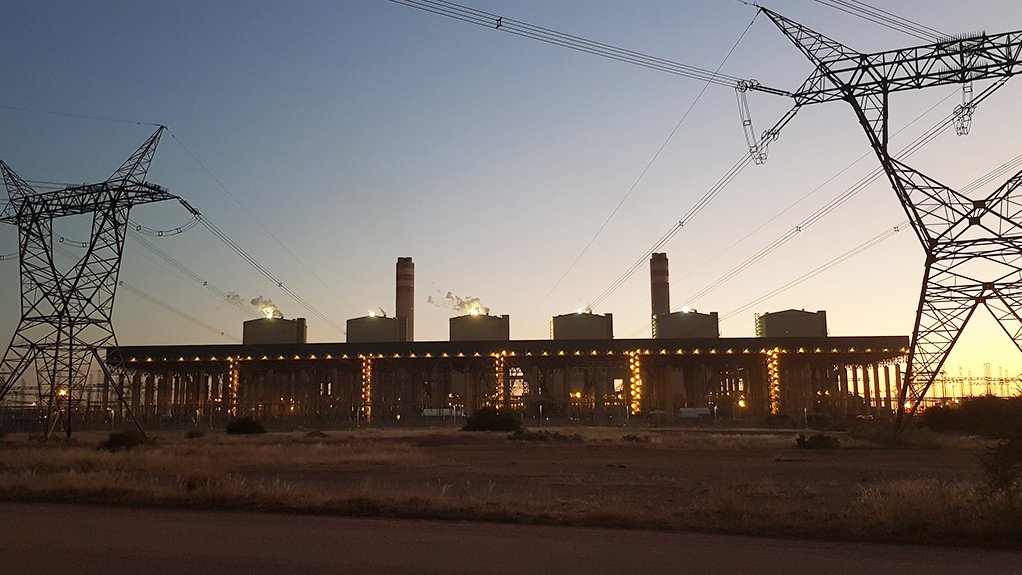


Eskom expects to submit its final benefit-cost analysis (BCA) report on flue gas desulphurisation (FGD) at the Medupi power station, in Limpopo, to Forestry, Fisheries and the Environment Minister Willie Aucamp in early April, having released a draft report on the air-pollution reduction technology and six alternatives for public comment on February 24.
The State-owned company acknowledged during a virtual consultation on the draft report this week that the submission had failed to meet the initial six-month deadline set in a directive issued by then Minister Dr Deon George on March 31, 2025.
That directive followed Eskom’s 2024 application for exemption from the sulphur dioxide (SO2) minimum emission standards (MES) for Medupi, in which it also questioned the appropriateness of the FGD installation.
This despite it being a condition of a $3.7-billion loan to Eskom approved by the World Bank in 2010.
The exemption was granted until 2030, but the directive stipulated that the BCA for FGD at Medupi be expanded to include an assessment of alternatives to installing FGD, while comparing the cost of complying with SO2 standards with the human health costs of not complying.
The draft report, thus, includes not only BCA conclusions for the installation of Wet, Semi-Dry and Dry FGD technologies, but also six alternative emission-reduction scenarios.
Only the wet FGD solution actually meets South Africa’s MES, as set under the country’s National Ambient Air Quality Standards (NAAQS), for which the Department of Forestry, Fisheries and the Environment is responsible for enforcing.
However, Wet FGD is also listed as having the highest upfront capital cost of R56-billion, compared with R48-billion for Semi-Dry FGD and R15-billion for Dry FGD.
The total 45-year project lifetime cost for Wet FGD, meanwhile, was outlined as being a nominal R383-billion, the recovery of which would potentially add 4c/kWh to the electricity tariff.
Across all three FGD technologies, the BCA ratios are well below one, suggesting that the monetised value of health benefits is lower than the required capital and operating expenditure for FGD.
Eskom’s proposed alternatives are based partly on these costs and the poor BCA ratio, as well as its assessment of the measured ambient air quality across the Waterberg Bonjanala Priority Area between 2022 and 2024, which indicates “general compliance with NAAQS indicating that the airshed is not saturated”.
The health benefits of these alternatives were thus focused more on the Highveld rather than in the Waterberg.
The capital costs for the six alternative scenarios in the draft range from R5-billion to R11-billion, and include:
- an air quality offset programme involving the expansion of a clean cooking initiative to 96 000 households in close proximity to coal stations that currently use dirty fuels;
- the retrofit of Arnot, Camden, Grootvlei, Hendrina and Kriel power stations with small modular nuclear reactors (SMRs);
- the building of solar, wind, battery and pumped hydro across six sites;
- the installation of so-called high-efficiency, low emission (HELE) circulating fluidised bed combustion technology at Hendrina, Grootvlei and Duvha;
- the introduction of coal beneficiation and efficiency improvements at all Eskom’s coal stations to reduce emissions; and
- the installation of post-combustion carbon capture utilisation and storage (CCUS) technologies.
The draft report indicates the clean cooking offset programme as having the highest BCA ratio for both particulate emissions and SO2 reductions, but questions have been raised about the long-term sustainability of such offsets.
Positive health benefits were also indicated for the renewables and SMR alternatives, but these were not fully quantified in the form of a BCA ratio, as the study did not consider the power generation benefits.
Negative ratios were provided for the HELE, coal beneficiation and CCUS alternatives, while the draft report also highlights that several of the technologies that have been considered are pre-commercial in nature.
Various alternative interventions, including substitute technology solutions, were raised during the virtual public consultation process.
Renew-e managing partner Etienne Rubbers argued, for instance, that Eskom must be prepared to invest the capital that it would otherwise need to spend on Medupi’s FGD, or proceed with the FGD as planned.
“The purpose of the Medupi BCA was not to potentially give Eskom a free pass and not do anything . . . the question is whether there are not better places to spend a portion of the capital to give a better health impact,” he said.
Rubbers proposed various alternatives not yet considered, including using the capital to accelerate the strengthening of South Africa’s transmission grid to facilitate a higher penetration of renewable energy and enable a reduction in the coal burn, or the earlier retirement of Eskom’s more polluting power stations.
Several concerns were also expressed during the session over the fact that none of the alternatives met South Africa’s MES requirements, while the current exemptions were having serious health impacts.
Eskom promised to consider these inputs as well as those that would be received in written form ahead of the March 25 closing date for public comment.
It also indicated that it would update the draft report and prepare a comment and response report capturing all the stakeholder input received.
This report, together with the final version of the BCA, would then be submitted to Aucamp for a determination.
Eskom would approach lenders such as the World Bank only once a decision was made by the Minister and should that decision have an impact on its loan obligations.
Article Enquiry
Email Article
Save Article
Feedback
To advertise email advertising@creamermedia.co.za or click here


Projects
Latest Multimedia
Latest News
Showroom
Your global lifecycle technology & service partner for materials & minerals processing equipment for coal, iron ore, copper, manganese & other...
VISIT SHOWROOM
CMTS is a leading, well-established EC&I contractor with 37+ years of mining and industrial experience. We execute full-scope EC&I projects with...
VISIT SHOWROOM

Press Office
Announcements
What's On
Subscribe to improve your user experience...
Option 1 (equivalent of R125 a month):
Receive a weekly copy of Creamer Media's Engineering News & Mining Weekly magazine
(print copy for those in South Africa and e-magazine for those outside of South Africa)
Receive daily email newsletters
Access to full search results
Access archive of magazine back copies
Access to Projects in Progress
Access to ONE Research Report of your choice in PDF format
Option 2 (equivalent of R375 a month):
All benefits from Option 1
PLUS
Access to Creamer Media's Research Channel Africa for ALL Research Reports, in PDF format, on various industrial and mining sectors
including Electricity; Water; Energy Transition; Hydrogen; Roads, Rail and Ports; Coal; Gold; Platinum; Battery Metals; etc.
Already a subscriber?
Forgotten your password?
Receive weekly copy of Creamer Media's Engineering News & Mining Weekly magazine (print copy for those in South Africa and e-magazine for those outside of South Africa)
➕
Recieve daily email newsletters
➕
Access to full search results
➕
Access archive of magazine back copies
➕
Access to Projects in Progress
➕
Access to ONE Research Report of your choice in PDF format
RESEARCH CHANNEL AFRICA
R4500 (equivalent of R375 a month)
SUBSCRIBEAll benefits from Option 1
➕
Access to Creamer Media's Research Channel Africa for ALL Research Reports on various industrial and mining sectors, in PDF format, including on:
Electricity
➕
Water
➕
Energy Transition
➕
Hydrogen
➕
Roads, Rail and Ports
➕
Coal
➕
Gold
➕
Platinum
➕
Battery Metals
➕
etc.
Receive all benefits from Option 1 or Option 2 delivered to numerous people at your company
➕
Multiple User names and Passwords for simultaneous log-ins
➕
Intranet integration access to all in your organisation